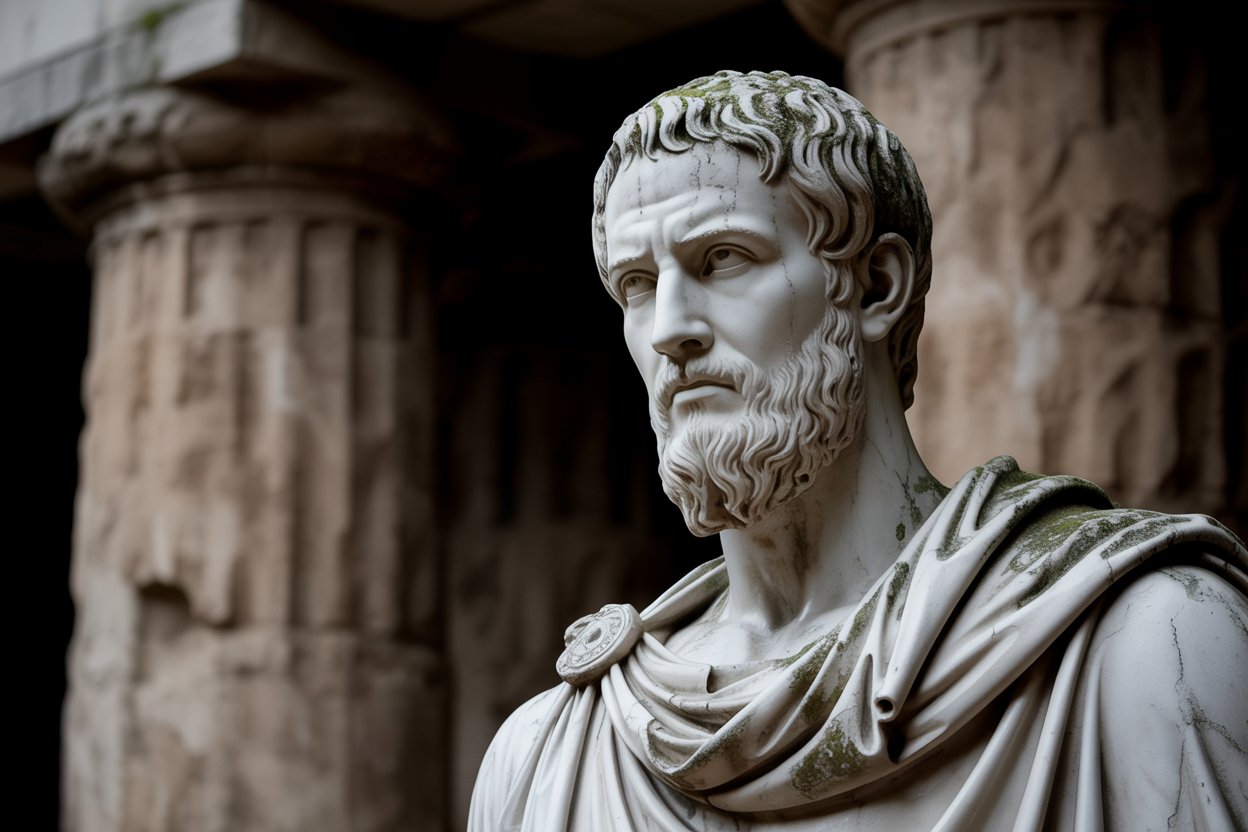
Self-discipline separates those who achieve lasting success from those who drift through life reacting to circumstances. The ancient Stoics understood this truth two thousand years ago. They built a practical framework for mental toughness that is still relevant today.
Marcus Aurelius, Epictetus, and Seneca taught that discipline is not about deprivation or willpower. It’s about training your mind to respond wisely instead of reacting emotionally. These ten Stoic principles offer a roadmap for building unwavering self-control in a world designed to distract and weaken you.
1. Control What You Can, Accept What You Can’t
Epictetus makes clear the basis of Stoicism: “Some things are within our power, while others are not.” Your thoughts, intentions and actions are under your control. Others don’t.
Wasting energy on the weather, the market, and other people’s opinions, as well as countless daily events, takes away the energy you need for the things that actually matter. Discipline begins when you stop fighting reality and direct your efforts toward your controllable sphere of influence.
Marcus Aurelius reinforces this: “You have power over your thoughts, not external events. Realize this, and you will find strength.” Disciplined people conserve mental energy by letting go of what cannot be changed, then channeling that energy toward decisions and habits that determine outcomes.
2. Master Your Emotions Before They Master You
The Stoics taught the regulation of emotions through rational examination. Seneca wrote, “The best medicine for dealing with anger is to delay.” The pause between stimulus and response creates space for wisdom to work.
Marcus Aurelius practices this every day: “If you are oppressed by something external, the pain is not caused by the thing itself, but by your estimation of it; and this you can withdraw at any time.” Your interpretation controls your emotional state.
The untrained mind reacts impulsively. A disciplined mind responds thoughtfully. This gap separates those who control their own lives from those whose lives are controlled by others.
3. Practice Voluntary Discomfort
Seneca advises deliberately experiencing mild hardship: “Allocate certain days, on which you will be satisfied with the scantiest and cheapest food, with the roughest and roughest clothes.” This is not a punishment. That is preparation.
Deliberate discomfort will build resilience before a crisis demands it. Cold exposure, fasting, physical challenges, and a deliberate minimalist lifestyle train your nervous system to handle stress. This practice destroys the fear of loss. If you once lived well and survived, losing comfort is no longer a threat.
Modern conveniences weaken discipline. The Stoics deliberately stayed away from ease in order to maintain mental toughness.
4. Live according to reason, not pleasure
Epictetus taught, “Do not try to make events happen as you wish, but hope that they happen as they are, and everything will be fine with you.” The search for pleasure creates endless dissatisfaction because pleasure quickly fades.
Seneca warns about the comfort trap: “It is not the person who has too little, but the person who wants more, who is poor.” When pleasure guides choices, you become a slave to external conditions.
Reason provides a stable foundation. Acting on principle, not on impulse, will build a character that is resilient to adversity. Self-discipline means choosing what is right over what is easy.
5. Disengage From External Validation
Marcus Aurelius wrote, “Everything we hear is opinion, not fact. Everything we see is just perspective, not the truth.” Praise inflates the ego. Criticism deflates it. Both draw your sense of worth out of yourself.
Stoic discipline means building one’s identity based on character, not reputation, and what you do when no one is looking is more important than public performance. Seeking approval makes you weak. Every decision is filtered through “what will people think?” rather than “what is right?”
The antidote is indifference to opinion. Realize that other people’s views reflect their values and biases, not the objective truth about your values.
6. Remember Death
Marcus Aurelius practices memento mori: “You can leave life right now. Let it determine what you do, say, and think.” Awareness of death is not unnatural. This makes it clear.
Acknowledging the temporary nature of life will eliminate procrastination. Even trivial worries recede. Time is precious because it seems limited. Seneca wrote, “It’s not that we have a short time to live, but that we waste it.”
Awareness of death sharpens focus. He asked: “If today was your last day, would it matter?” The answer eliminates noise instantly and builds discipline by eliminating the illusion of infinite time.
7. Act With Integrity Even When No One Is Looking
Epictetus taught, “First tell yourself what you want to be; and then do what you have to do.” Private actions do more to build or erode character than public actions.
Making a harder decision instead of an easier mistake, even when no one knows about it, shows genuine character. Marcus Aurelius wrote, “Don’t waste any more time arguing about what a good person should be. Be a good person.”
Public accountability provides external motivation. Personal integrity comes from internal standards. If you compromise in private, you weaken your ability to act disciplined in public. Character is not situational. It’s consistent.
8. Talk less, observe more
Epictetus advises, “We have two ears and one mouth so we can listen twice as much as we talk.” Silence builds wisdom.
Undisciplined people talk constantly, express opinions without thinking, and react verbally to every situation. Observation teaches what talking cannot. Listening reveals truths that obscure speech.
Self-discipline means controlling your tongue until you have something worthwhile to say. Restraint in speaking shows restraint in thinking.
9. Be prepared for difficulties before they arrive
Seneca taught premeditatio malorum, visualizing potential setbacks: “People who anticipate trouble will take away their power when it arrives.” This is not pessimism. This is preparation.
When you mentally rehearse loss, failure, or hardship, the actual event loses its shock value. Your response becomes measured, rather than panicked. Modern culture promotes a toxic positive attitude that leaves people unprepared for life’s inevitable hardships.
The Stoic approach builds resilience by acknowledging reality. Negative visualization strengthens discipline by eliminating the fear that weakens the response.
10. Focus on Getting Better, Not Looking Better
Epictetus taught, “Wealth does not lie in having many possessions, but in having few desires.” Modern culture is obsessed with image. This destroys true self-discipline.
Marcus Aurelius wrote for himself, not an audience: “Very little is needed to make life happy; it is all within you, in your way of thinking.” The Stoic’s goal is internal improvement, not external validation.
Image-focused disciplines become grueling performances. Discipline focuses on getting better, regardless of the claim. Progress is its own reward. The world cannot measure your internal growth, making the work more difficult but authentic.
Putting It All Together
These ten Stoic principles build self-discipline from the inside out through daily practice. Marcus Aurelius, Epictetus, and Seneca did not teach theory. They live by these rules despite difficulties most people can hardly imagine.
Their wisdom endures because human nature does not change. We still struggle with distraction, emotional reactivity, addiction to comfort, and fear of judgment. The Stoic framework addresses these universal challenges with practical tools and strategies.
Start with one principle. Practice it until it becomes automatic. Then add other self-discipline compounds as time goes by. Becoming the person you are through this practice will handle whatever life throws at you with strength, wisdom, and unwavering character.
Agen Togel Terpercaya
Bandar Togel
Sabung Ayam Online
Berita Terkini
Artikel Terbaru
Berita Terbaru
Penerbangan
Berita Politik
Berita Politik
Software
Software Download
Download Aplikasi
Berita Terkini
News
Jasa PBN
Jasa Artikel
News
Breaking News
Berita